Double Lives, Double Risks: What Happens When Your Teen's Secret Account Becomes Their Real One
The Account You Don't Know About
Most parents who monitor their teenager's social media activity believe they have a reasonable picture of what their child is doing online. They may follow their teen's Instagram, check in on their TikTok, or periodically review their Snapchat friends list. What many do not realize is that a significant number of American teens maintain at least one secondary account—sometimes called a "finsta" (fake Instagram), a "spam account," or simply a "private"—that exists entirely outside parental view.
These accounts are not always created with harmful intent. In many cases, a teen's hidden profile begins as a lighthearted space to be unfiltered with a small group of close friends. But the very conditions that make these accounts feel safe—anonymity, limited audience, absence of adult oversight—are the same conditions that allow risk to accumulate quietly and without interruption.
At Social Media Safety Nashville, we work with families across the region who are navigating exactly this challenge. And what we consistently find is that the existence of a secret account is rarely the core problem. It is a symptom of something deeper that deserves thoughtful attention.
Why Teens Build Hidden Digital Spaces
To understand the behavior, parents must first understand the motivation. Adolescence is, by its nature, a period of identity formation. Teenagers are actively experimenting with who they are, what they believe, and how they want to be perceived. Social media has become a primary arena for that experimentation—but the main, public-facing profile carries enormous social weight. Every post is a performance evaluated by classmates, extended family, and sometimes strangers.
A secondary account removes that pressure. It offers a space where a teen can post without curating, speak without consequence, and connect with peers in a way that feels authentic rather than performative. That impulse is not inherently dangerous. In fact, the desire for a private self is a normal and healthy part of growing up.
The problem emerges when that private space becomes progressively less bounded. Without any natural checks—parental awareness, community standards, or even the self-regulation that comes from being visible—teens can drift toward content and conversations that they would never engage with publicly. What begins as candid humor or venting about school stress can gradually shift toward explicit content, contact with unknown adults, or participation in communities built around self-harm, substance use, or other harmful behaviors.
The Pattern of Escalation
Researchers and child safety professionals have documented a recognizable pattern in how hidden accounts evolve over time. It rarely happens in a single dramatic step. Instead, it unfolds through a series of small decisions, each one feeling relatively minor in the moment.
A teen might start by following accounts their parents would disapprove of. Then they begin engaging—liking posts, leaving comments. Eventually they start contributing their own content. Connections form with people who share those interests, some of whom may be adults with manipulative intentions. Direct messages begin. The relationship deepens. By the time any of this reaches a point of genuine crisis, the teen may be emotionally invested in a community or relationship that took months to build.
This gradual escalation is precisely what makes secret accounts so concerning from a safety standpoint. There is no single moment where a clear line is crossed. There is only a slow drift that happens in the dark.
Warning Signs Parents Can Recognize
Because the account itself is hidden, parents cannot rely on direct observation. However, behavioral changes often accompany the escalation described above, and those changes are visible if a parent knows what to look for.
Consider the following patterns as potential indicators that warrant a calm, curious conversation:
- Increased secrecy around devices, particularly if a teen who was previously open becomes defensive or anxious when a phone is nearby
- Unexplained emotional shifts following time spent online, including withdrawal, irritability, or unusual mood elevation
- New online vocabulary or references to communities, platforms, or figures that don't appear anywhere on their known accounts
- Excessive or unusual data usage that doesn't align with known apps or streaming habits
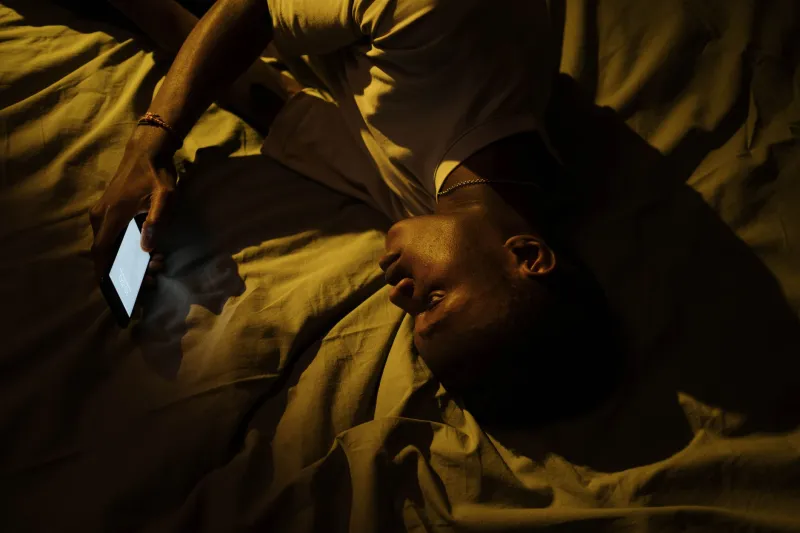
- Sleep disruption tied to device use, particularly late-night activity that suggests engagement with a different audience or time zone
None of these signals is conclusive on its own. But in combination, they suggest a teen who is living a more complex digital life than the one their parents can see.
The Trust Equation
Parents often ask whether they should simply search for hidden accounts—checking app libraries, reviewing phone settings, or using parental monitoring software to detect secondary profiles. These are legitimate tools, and they have their place. However, surveillance alone rarely solves the underlying dynamic.
If a teen creates a secret account because they feel their online presence is over-monitored, discovering the account through covert means is likely to deepen that sense of distrust rather than resolve it. The teen learns to hide more carefully. The parent learns less.
The more durable solution involves building the kind of relationship in which a teenager feels less compelled to maintain a hidden identity in the first place. This does not mean eliminating all privacy—teens deserve and need some degree of digital autonomy. It means creating regular, non-confrontational opportunities for conversation about online life that make a teen feel heard rather than interrogated.
Practical approaches include asking open questions about what platforms their friends are using, expressing genuine curiosity about the content they enjoy, and sharing your own experiences with online communication—including its complexities. When teens perceive their parents as informed and approachable rather than reactive and judgmental, they are more likely to bring problems forward before those problems escalate.
Setting Expectations Without Shutting Down Conversation
Families benefit from having explicit, age-appropriate conversations about account creation and online identity before a secondary account ever becomes an issue. This means establishing clear household expectations—such as the understanding that all active accounts should be disclosed to a parent—while also explaining the reasoning behind those expectations in terms a teen can respect.
Framing the conversation around safety rather than surveillance makes a meaningful difference. A parent who says, "I need to know where you are online because people online are not always who they appear to be," is far more likely to be taken seriously than one who simply demands access as a matter of control.
It is also worth acknowledging that the desire for privacy is legitimate. Teens who feel that acknowledgment are more likely to negotiate openly than to disappear into hidden accounts.
A Final Word for Nashville Families
The digital landscape our teenagers are navigating is genuinely complex. Platforms are designed to encourage engagement, anonymity is easy to maintain, and the social pressures driving teens toward hidden spaces are real. None of that means parents are powerless.
Awareness is the first and most important tool available to any family. Knowing that secret accounts exist, understanding why teens create them, and recognizing the behavioral signs of escalation puts parents in a far stronger position—not to control every click, but to remain a meaningful presence in their teenager's digital life.
At Social Media Safety Nashville, our mission is to help families build exactly that kind of informed, sustained presence. Because protecting a teenager online is not a single conversation. It is an ongoing relationship—one that is worth every effort it requires.